
Creative gifts
Gifts for Kids Who Love Making Up Stories
The spoon has a voice. The walk home has a villain. Yesterday’s dragon has apparently moved into the cupboard. For a child who keeps inventing stories, the best gift depends on what they like doing with them.
Start with how they tell it
Choose picture prompts for a child who tells stories aloud, puppets for one who performs them, and a blank comic or sketchbook for one who draws. A personalized illustrated book suits a child who wants to appear in an adventure, with an adult helping to create it.
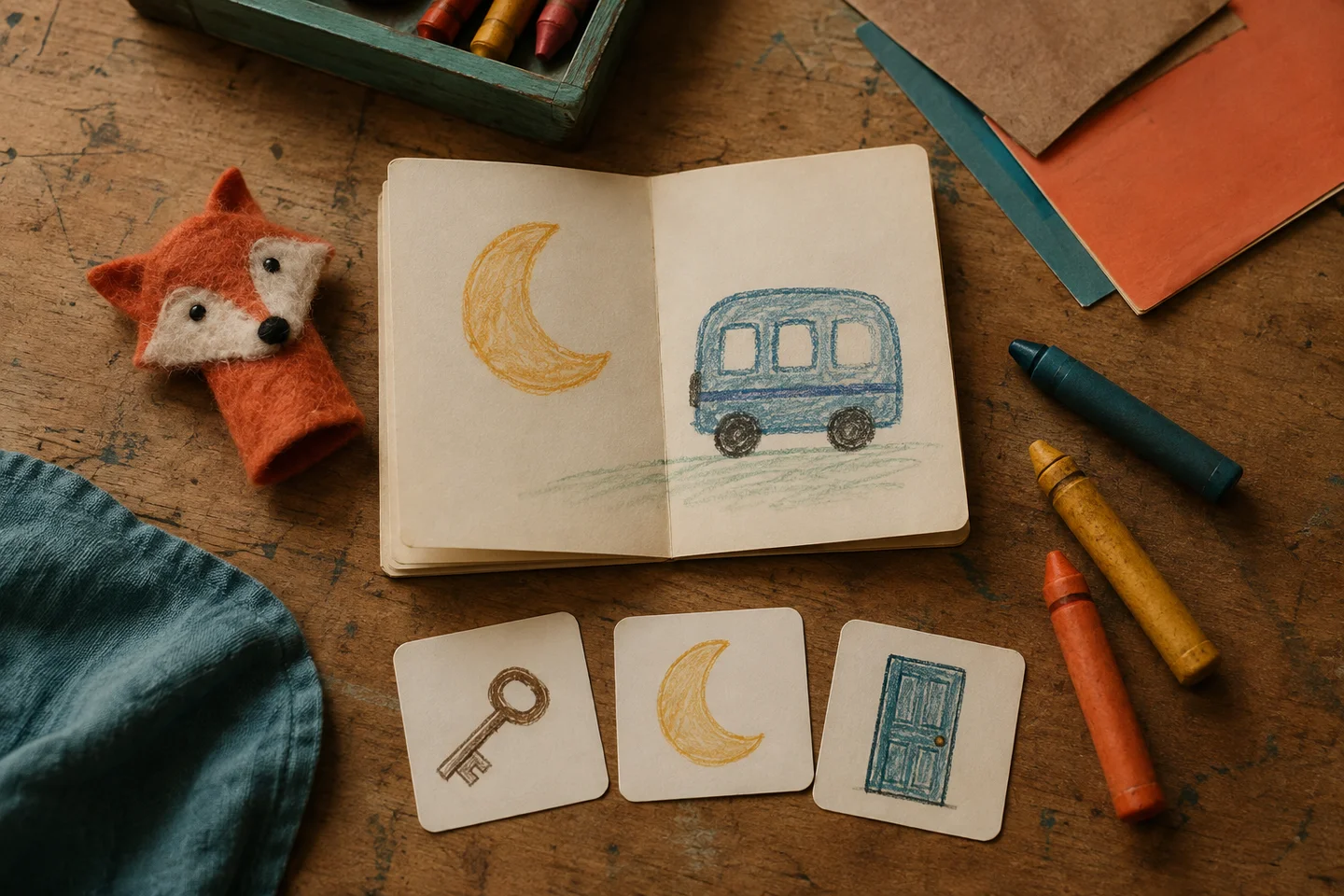
Choose the part they already enjoy
Listen to what happens before you suggest writing anything down. Some children want an audience. Others want twenty uninterrupted minutes to draw the same castle. The gift should leave them room to carry on.
They tell it out loud
Try picture cards or a small set of illustrated prompts they can rearrange. Choose clear pictures if reading the prompts would interrupt the story.
They become every character
Try one or two puppets, a simple costume piece, or a ticket pad for their next living-room show.
They draw the story
Try a blank comic book for panels, or plain bound paper when borders would get in the way.
They revisit one invented world
Give them somewhere to keep its maps, character drawings and unfinished episodes. A folder can be more useful than another set of prompts.
For the child who can tell a story about anything
Picture cards work well as an invitation: pick a character, a place and something unexpected. A fox, a station and a missing key are enough to start. The child can ignore a card or change its meaning; there is no need to turn the gift into a test.
eeBoo’s storytelling gift guide includes picture-based story cards among its options. Check the individual set’s pictures, instructions and age guidance before choosing. You can also draw a few simple prompts together on folded paper.
If the child wants to keep a spoken story, an adult can write down their words or help make a private recording. Ask first. Sometimes the fun was telling it once, with a different ending tomorrow.
For the storyteller who needs a stage
A puppet gives a character something to do with its hands. Start with a pair that can talk to each other, or choose one character the child already keeps pretending to be. A blanket over a table can become the theater; a large freestanding stage is optional.
Put a few blank tickets in the gift and offer to be the first audience. Before buying a costume, check the fit and whether the child prefers a full outfit or just a hat they can take off halfway through the performance.
For the child who fills the margins with characters
Look at the pages they already make. A comic artist may want panels and speech bubbles. A child who draws enormous maps may need large plain sheets and a folder. Someone who keeps folding paper into books may appreciate a blank bound book that feels finished before a single word is inside.
Give them enough room to change their mind. A lightly penciled title can wait. So can the ending. If they ask you to write the words, take down what they say and let the drawings remain theirs.
When they want to step into a finished adventure
There is another kind of wish: ‘Can I be in the book?’ Tippytale can create an original illustrated story from an adult’s idea, with the child as a character. An imagined power, a favorite place, or a recurring make-believe game can be the starting point.
In the original superhero example below, Maya sees missing sounds as glowing ribbons. Here she discovers a trail beneath a bench. The idea gives her something specific to notice and follow through the story.
This is an adult-led way to make a new book. It generates new text and illustrations; it does not preserve a child’s exact manuscript, handwriting or drawings. For that, keep their pages in a blank book or use a service designed to reproduce artwork. You can read the complete Tippytale book free before deciding whether to order a hardcover.
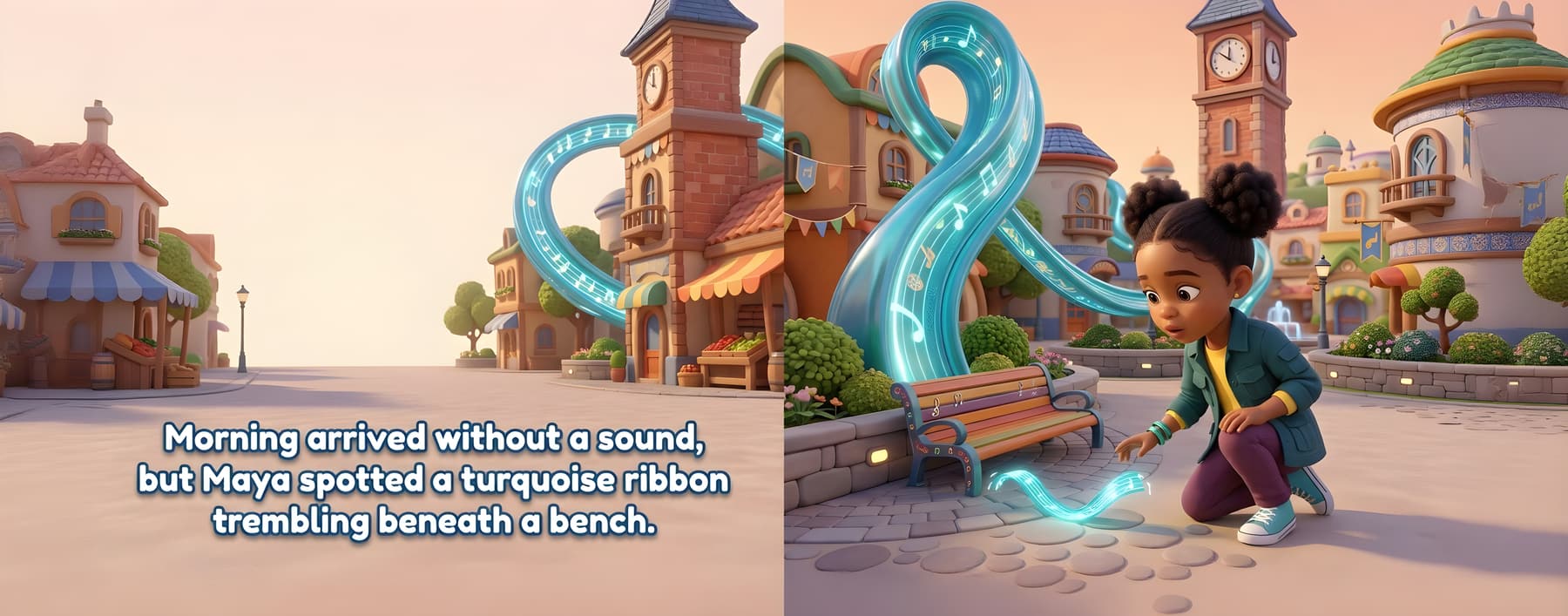
Explore an original superhero book
See how one imagined ability becomes part of the adventure.
Give the gift without assigning homework
A box of materials does not need to come with ‘Now write us a story.’ Offer to join in, then follow the child’s lead. They may want you to play the fox, draw the train wheels, or sit still while the moon explains the rules.
- Choose a format the child can use comfortably; check the product’s age guidance.
- Ask before recording, copying or sharing anything they make.
- For a surprise, check with the parent that an adult is available if the gift needs help.
- Leave room for a story that never becomes a finished book.
FAQ
Choosing a storytelling gift
What can I give a storyteller who cannot write yet?
Picture prompts, puppets and drawing materials let a child tell or show a story without writing it. An adult can take down the words if the child wants a written version. Check each product’s age guidance.
What is the difference between a story-making kit and a personalized book?
A kit gives the child materials for making stories themselves. A personalized book is a finished reading experience featuring the child. Tippytale’s custom route involves an adult developing and reviewing a new illustrated story.
Can Tippytale print my child’s drawings exactly as they made them?
Tippytale generates new illustrations. It is not an artwork reproduction or manuscript printing service. If keeping the original marks and words is the point, choose a blank book, a folder, or a reproduction service instead.