
Child moments
How to Use a Personalized Sibling Book When a New Baby Arrives
A useful new-baby sibling story is about the older child's changing day, not a promise that they will love the transition.
Keep the older child's routines and relationships visible.
Use the story to name what may change, what stays steady, who cares for the older child when the baby needs attention, and how mixed feelings can be spoken aloud. The baby can appear, but the older child's experience should remain central.
What the older child may be wondering
A new baby brings excitement, but it also changes routines, attention, noise, sleep, and family rhythms. A story can give the older child a gentle way to ask, "Where do I fit now?"
- Will I still matter?
- Will my grown-ups still have time for me?
- What can I do when the baby needs attention?
- Can I have mixed feelings and still be loved?
Before the baby arrives vs. after
Before the baby arrives, a story can help the child imagine the change. After the baby arrives, it can become a rereadable reminder that love is not being replaced.
Before arrival
Use the book to talk about what may change and what will stay steady.
First weeks home
Read when the older child needs a quiet moment that is just for them.
Later adjustment
Return to the story when the child needs reassurance about their place.
What a good big-sibling story should do
A good story does not make the older child responsible for everyone's happiness. It should show that love can make room for the baby while the older child still has a secure place.
- Keep the older child emotionally central.
- Avoid making them only "the helper."
- Show a caring adult making time for them.
- Allow the change to feel real, not magically easy.
When to create from scratch
Tippytale does not currently list a fixed new-baby template. Create from scratch when the baby details, caregiver language, timing, or family setup need to be specific to the child.
Do not confuse three different sibling-book jobs
A new-baby transition story centers the older child's changing routines and relationships. A general sibling adventure centers something the children do together. A twins book needs two age-matched identities and balanced roles; it should not automatically cast one child as the older helper.
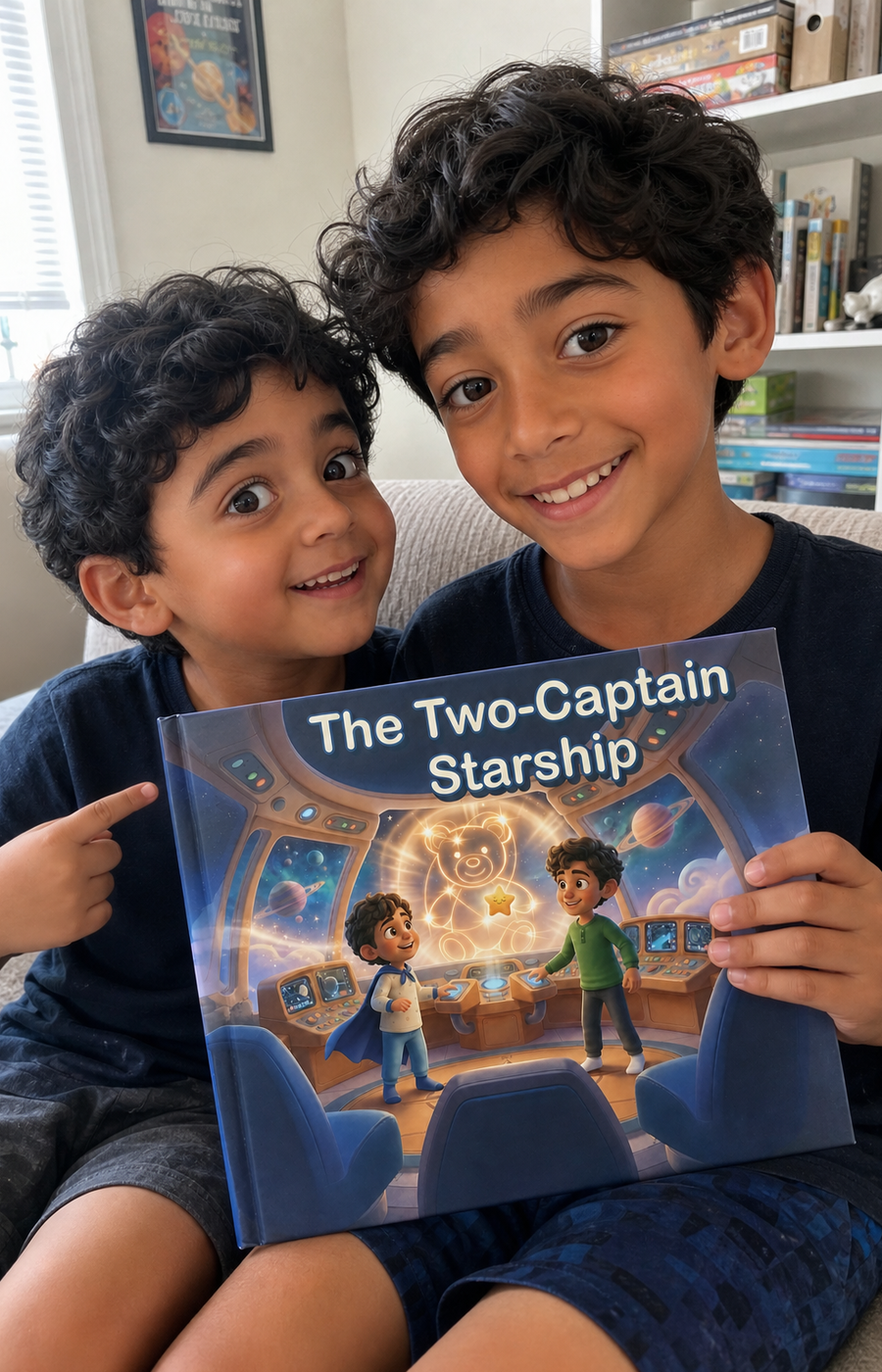
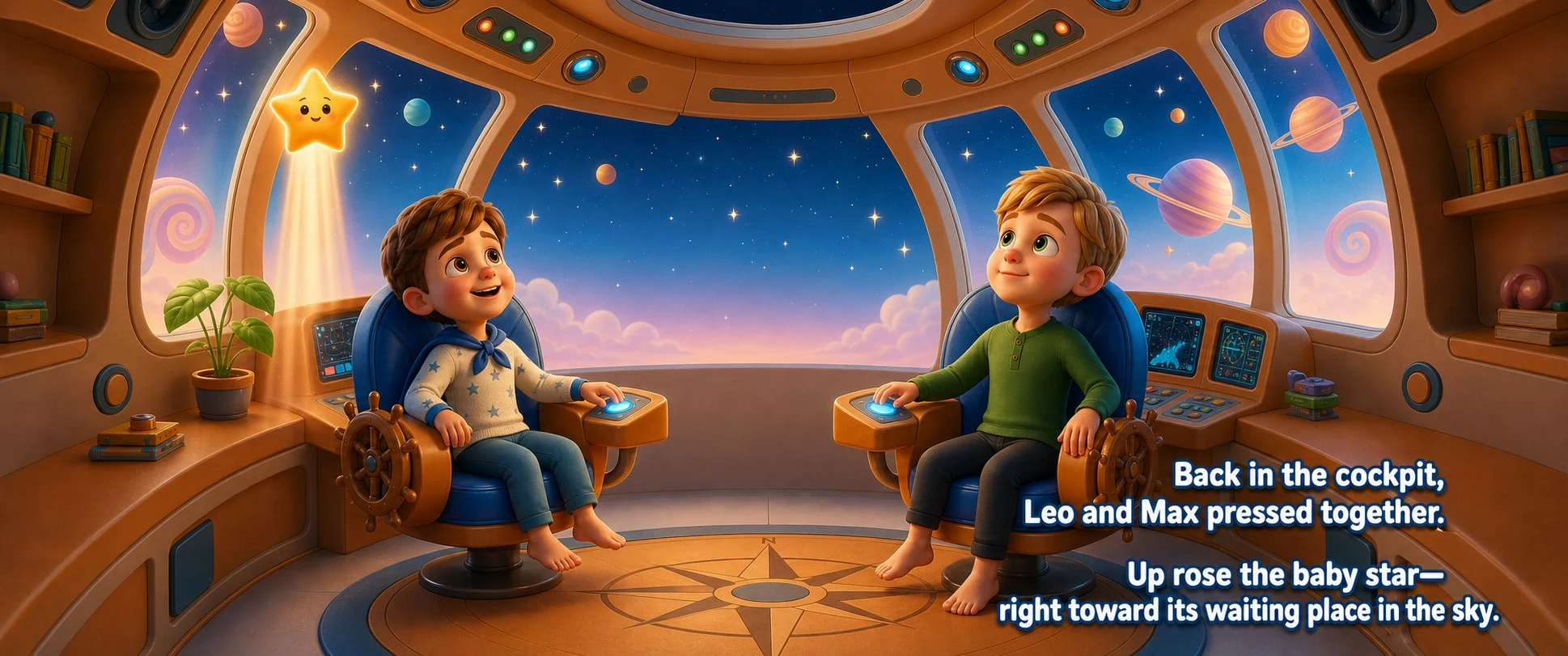
Two-Captain Starship is verified proof that Tippytale can place two children in one story. It is a 24-page space adventure listed for ages 5 to 8, with Younger Captain and Older Sibling roles. That makes it useful for general sibling teamwork, not as evidence of a ready-made new-baby or twin-neutral story.
FAQ
Questions worth answering before choosing.
Is a big-sibling book better before or after the baby arrives?
Both can work as conversation prompts. Before arrival, name what may change; after arrival, revisit real routines and caregiver time without treating the story as a guaranteed adjustment tool.
Should the new baby be the main character?
Usually no. The baby can be part of the story, but the book should center the older child's feelings and role.
Can the book be for a big brother or big sister?
Yes. Create from scratch can shape the language around big brother, big sister, or older sibling. The current ready-made Two-Captain Starship template is a general ages 5-8 sibling adventure, not a new-baby template.
Can a personalized book help jealousy?
It can support the conversation by helping the older child feel seen. It should not be treated as a guaranteed fix for jealousy or adjustment challenges.
Helpful context