
Preparing for a moment
Books to Prepare a Child for Moving House: What to Look For
The most useful moving books make the change visible in small, ordinary steps and leave room for more than one response.
Match the book to the biggest concrete unknown.
Look for packing, a real goodbye, an unfinished arrival, familiar objects that travel, and one routine beginning again. A book can give the family words; it cannot decide how the child will feel.
Choose by the unknown
What part of moving does the child need to see?
Choose the book that matches the child's concrete question, not the one with the happiest ending.
Five scenes worth looking for.
A useful book does not need a complicated plot. It needs a visible sequence a child can recognize and revisit.
Something changes before moving day
A shelf empties, a favorite cup is wrapped, or boxes appear in the bedroom.
Something travels with the child
A toy, lamp, blanket, or song remains familiar across both homes.
The old home gets a real goodbye
The story notices a doorframe, window, step, neighbor, or familiar sound.
The new home is unfinished
Bare rooms, tape, boxes, and adults still finding things are allowed to remain visible.
One small ritual begins again
The family reads on a mattress, uses the usual breakfast bowl, or turns on the same lamp.
Original concept proof
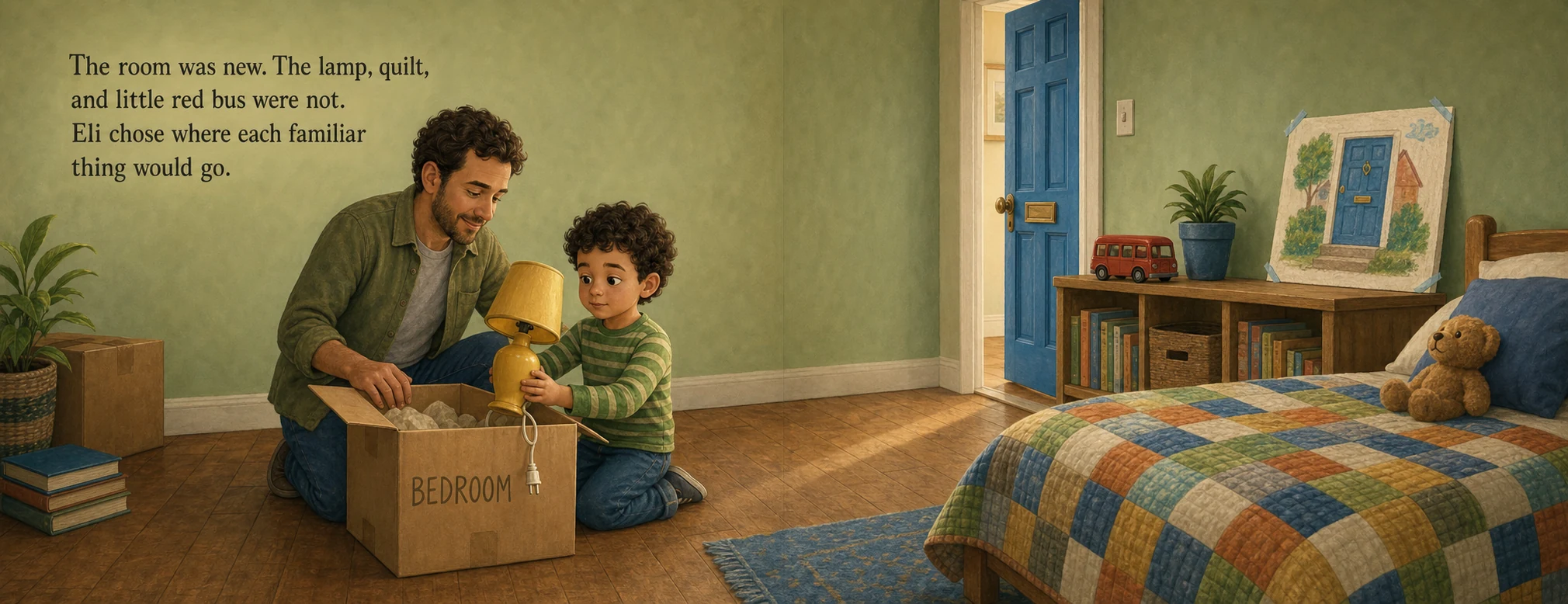
Eli chooses where familiar things will go.
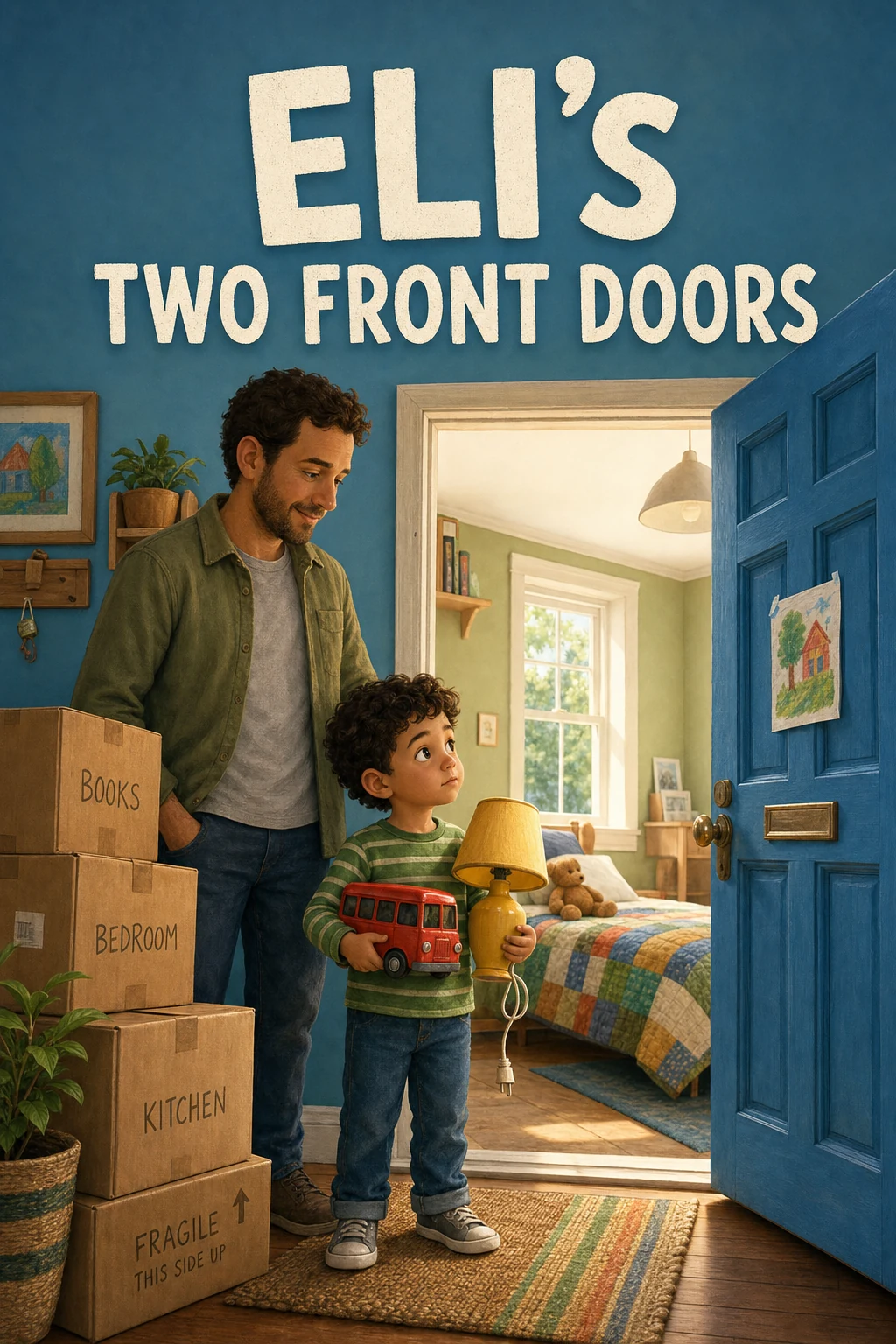
Eli's Two Front Doors is an original Tippytale demo, not a fixed template. The new room remains visibly unfinished while the same yellow lamp, patchwork quilt, and red bus connect it to the life Eli already knows.
The scene allows Eli to be thoughtful. It does not insist the move feels exciting or that unpacking familiar objects controls the child's response.
Read it as a shared reference, not a script.
On the first read, let the story remain a story. Later, point to one or two concrete moments and explain which parts of the real move will be similar. Let the child correct the story or say they do not want the same ritual.
Pause if repeated reading feels unwelcome. The goal is not to persuade the child to feel ready. For a new-school question, use a focused school story rather than asking one moving book to cover every transition.
When a personalized moving story is worth making.
Use create from scratch when the old room, new room, people, pet, familiar objects, and first small ritual are what make the story useful. Review the complete personalized book free before ordering the hardcover.
No moving book prevents distress, guarantees adjustment, or supplies one correct emotional response. If the move involves grief, family separation, housing insecurity, or ongoing distress, a book should remain one small part of support from trusted adults and, when appropriate, a qualified professional.
Start with the details the family knows
Use one ordinary transition and review the complete result carefully.
FAQ
Questions worth answering before choosing.
How can I use a book to prepare a child for moving house?
Read it first as a story, then connect one or two scenes to facts the child can expect. Say plainly when the real move may be different.
What should a children's book about moving show?
Look for packing, a goodbye, the journey or handover, an unfinished new room, and one familiar object or routine returning.
Are moving books useful for toddlers and preschoolers?
They can be when pictures show concrete actions such as boxes appearing, a toy traveling, or familiar objects being unpacked. Keep the explanation short and read together.
What if the move also means leaving friends or starting school?
Name that part directly. A separate goodbye or school book may do that job better, and only confirmed details should be included.